

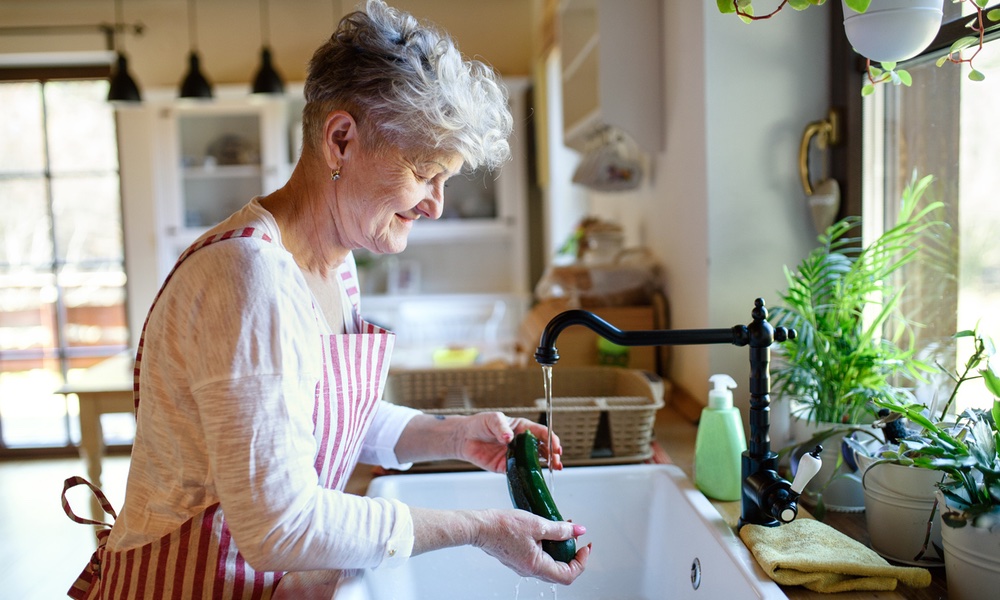


As takeout and ready-made meals become more common, fewer people are cooking regularly. But for older adults, stepping back into the kitchen can offer measurable benefits for brain health.
The physical and mental activity cooking requires can help ward off dementia, according to a new Japanese study that drew on data from nearly 11,000 adults 65 and older.
Participants were part of the Japan Gerontological Evaluation Study, a large, ongoing project examining aging and health. The seniors were followed for six years, through 2022, allowing their cognitive health to be tracked over time.
At the outset, participants completed detailed questionnaires about their cooking habits. They reported how often they prepared meals from scratch at home, ranging from never to more than five times per week. Researchers also assessed their culinary competence using seven practical skills, including the ability to peel fruits and vegetables and prepare more complex dishes like stews.Cooking is more than a daily chore. For older adults, it may be a practical, accessible way to stay mentally and physically engaged.
The group reflected a broad cross-section of older Japanese adults. About one in five participants was age 80 or older, half were women, and more than half were retired. Socioeconomic diversity was also represented: roughly a third had fewer than nine years of formal education, and 40 percent reported relatively low annual incomes.
Over the study period, 1,195 participants developed dementia — about 11 percent of the group. These cases were identified through Japan's public insurance system, which records functionally significant cognitive impairment requiring care.
A pattern emerged when the data were analyzed. Older adults who cooked at home more frequently had a lower risk of developing dementia. Preparing meals from scratch at least once a week was associated with a 23 percent lower risk in men and a 27 percent lower risk in women, compared to those who cooked less often.
The relationship was even more pronounced among participants with limited cooking skills. For those who were less experienced in the kitchen, cooking just once a week was linked to a 67 percent reduction in dementia risk. This suggests that the cognitive effect involved in learning and performing new tasks, such as following a recipe or managing multiple steps, may be especially beneficial.
The research team behind the Japan Gerontological Study emphasized the broader implications of these findings. As the researchers concluded, “Creating an environment where people can cook meals when they are older may be important for the prevention of dementia.”
The study also accounted for other factors that can influence brain health, including education and lifestyle habits. Even after adjusting for these variables, as well as known brain boosts such as volunteering, gardening and crafting, the association between cooking and frequency and reduced dementia, remained.
Why might cooking help? The answer appears to be multifaceted. Preparing meals involves planning, sequencing, attention and memory, all key cognitive functions. It also requires physical movement and coordination. Beyond that, cooking at home may promote healthier eating patterns, including greater intake of vegetables, lower sodium, healthy fats and other nutrients associated with brain health.Preparing meals from scratch at least once a week was associated with a 23 percent lower risk in men and a 27 percent lower risk in women.
Bear in mind that the study is observational — though it shows a connection between cooking at home and a reduced risk of dementia, it cannot prove that cooking directly prevents dementia. Other limitations include the possibility that mild cases of dementia were not captured in the data and that cultural differences in diet and cooking practices may affect how broadly the findings apply.
Even with those caveats, the results suggest that far from cooking being a daily chore, it may be a practical, accessible way for older adults to stay mentally and physically engaged. Whether it's preparing a simple soup or trying a new recipe, time spent in the kitchen may offer benefits that extend well beyond the menu.
The study is published in the Journal of Epidemiology & Community Health.